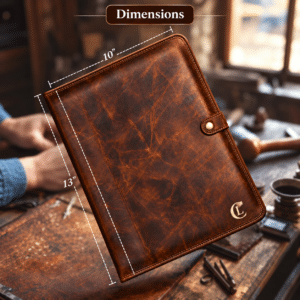
A leather portfolio folder in drum-milled mocha brown full-grain. The raised irregular grain comes from the hide, not a press, and hides the scuffs a smooth finish would show. 10…
Crunch is a finish, not a colour, and it is the most practical surface in this category for a folder that gets carried. The grain is raised and irregular, so a scuff lands in a valley instead of across a flat plane and simply is not visible from arm's length. Mocha is the shade — a mid brown with grey in it rather than red, which is why it sits closer to neutral than cognac does.
What “crunch” means on a hide
It is a mechanical finish, not a print. The tanned hide is tumbled in a drum for hours, which breaks down the fibre structure enough that the natural grain contracts into fine irregular ridges and the leather becomes softer and more pliable at the same time. The texture comes out of the hide itself, so no two panels have the same pattern and the ridges run deeper where the hide was naturally looser. That irregularity is the difference between this and a pressed pattern, which repeats and therefore looks printed under close light.
Embossed, debossed and milled are three different things
People use them interchangeably and they are not. An embossed leather portfolio is one where a pattern has been pressed into the surface under heat and pressure — often a fake grain, and on cheap leather a fake grain stamped over a sanded split to imitate a grain that was removed. Debossed means an impression pressed into the surface, usually initials or a logo, with no foil. Milled means the hide was physically tumbled so its own grain tightened, which is what this finish is. If a listing says embossed and shows a perfectly even pattern, that is a plate, not a hide.
Why texture hides wear that smooth leather shows
On a smooth face, every mark is a change in a uniform plane and your eye finds it immediately — a single scuff across a flat panel is visible across a room. On a milled surface the eye is already reading an irregular pattern, so a new mark has nothing to contrast against and reads as more of the same texture. The practical outcome is that a crunch folder two years old looks much like a new one, while a smooth folder of the same age looks two years old. Whether that is what you want is the real question: smooth leather earns a patina, textured leather resists change.
Where mocha sits between tan and chocolate
Mocha is a mid brown pulled toward grey rather than red. Against cognac it looks cooler and more muted; against chocolate it looks lighter and less formal. The useful consequence is pairing: cognac fights grey tailoring slightly because of the red in it, while mocha does not, and mocha also survives being seen next to black shoes better than tan or cognac would. It is the brown to pick if you wanted brown but have a wardrobe built around grey and charcoal.
What this finish is not good for
Two things. It will not take a crisp blind-embossed monogram, because the surface is already irregular and the impression competes with the grain instead of sitting cleanly in it — if you want initials on the cover, order smooth. And it is harder to wipe genuinely clean, because dust and polish sit in the valleys and need a brush rather than a cloth. If the folder lives on a desk in a dusty office and you want it to look crisp, smooth black is the easier thing to maintain.
Milled crunch against a smooth finish
Mocha crunch
Smooth leather
Surface
Raised, irregular grain
Even plane
Hides scuffs
Very well
Poorly
Develops a patina
Subtly
Visibly
Takes a monogram
Poorly
Cleanly
Cleaning
Needs a soft brush
Wipes with a cloth
Feel
Soft, pliable
Firmer
Where the shade sits
Shade
Undertone
Against grey tailoring
Against black shoes
Tan
Yellow
Clashes
Clashes
Cognac
Red
Fights slightly
Clashes
Mocha
Grey
Clean
Tolerable
Chocolate
Neutral
Clean
Tolerable
Specification
Price
$ 120
Leather
Full-grain cowhide, drum-milled
Colour
Mocha brown
Finish
Raised irregular grain, no pressed pattern
Edges
Folded and stitched, not cut and painted
Exterior
10 × 13 in (25.4 × 33 cm) closed
Pad bay
A4, and US letter also fits
Closure
Snap tab
Interior
A snap-flap document pocket, an angled easy-access slip pocket, a zip pocket, four business card slots and two pen holders, with an A4 notepad sleeve on the right
Hardware
Brass-tone zip pull and snap stud
Shipping
Free worldwide, duties paid
Returns
30 days, unused and with tags attached
Questions, answered
What does “crunch” mean in leather?
It is a milled finish. The hide is tumbled in a drum until its own grain contracts into fine irregular ridges, which also softens it. The texture comes from the hide, so no two panels match — unlike an embossed pattern, which is pressed from a plate and repeats.
Is the texture printed or pressed on?
Neither. It is mechanical, produced by tumbling the hide rather than stamping it. A pressed grain repeats under close light; a milled grain does not, and runs deeper where the hide was naturally looser.
Is crunch leather more durable than smooth?
Not stronger, but it looks better for longer. A scuff on a raised irregular surface has no uniform plane to contrast against, so it reads as more texture rather than as damage. A smooth folder of the same age shows its age.
Can I have initials embossed on it?
Not well. The surface is already irregular, so a blind impression competes with the grain instead of sitting cleanly in it. If a monogram matters, order a smooth black or brown cover instead.
How do I clean a textured surface?
A soft brush rather than a cloth, because dust settles in the valleys where a cloth only skims the ridges. For marks, a barely damp cloth and then dry flat at room temperature, away from any heat source.
How is mocha different from chocolate or cognac?
Mocha is a mid brown with grey in it rather than red, so it sits cooler than cognac and lighter than chocolate. It is the brown that works best against grey and charcoal tailoring.
Does it soften over time?
It starts soft, because milling breaks the fibre structure down before the hide is ever cut. Unlike a firm smooth cover, there is not much break-in period — it arrives feeling the way it will feel.
What if the colour is not what I expected on screen?
Return it within 30 days, unused and with tags attached. Textured brown photographs darker than it looks in daylight, and it is the shade most often misjudged from a screen.
Smooth brown is the one that earns a visible patina and takes a monogram cleanly. Black is the formal-room answer. The bags page covers the same milled hides at a larger size.