
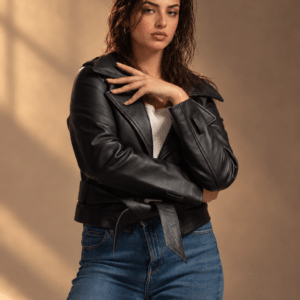
A retro biker jacket is the original 1950s moto cut: cropped above the waistband, wide lapels that fold back and snap down, an off-center zip, and a belt that buckles to one side. Cordwain cuts it in five colors — black, beige, cognac-brown, purple and red — in sizes XS to 3XL. Free shipping to the US in 4 to 9 business days, with duties settled before dispatch where the carrier supports it.
-
Biker, Black, Cafe Racer Jackets, Crop Moto Jacket, Women, Women Leather Jackets, Women's Leather Moto Jackets
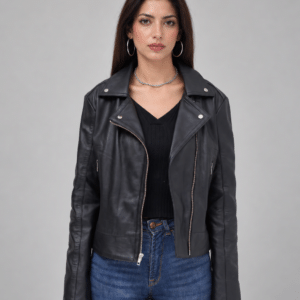
Women’s Black Cropped Leather Moto Jacket | Biker Style
Original price was: $ 399.$ 299Current price is: $ 299.Make every outfit stand out with the Women’s Leather Black Crop Moto Jacket, a stylish cropped biker jacket featuring a sleek leather-look finish, classic lapel collar, long sleeves, and a…
Select options This product has multiple variants. The options may be chosen on the product pageQuick View -
Biker, Black, Cafe Racer Jackets, Women, Women Leather Jackets, Women's Leather Moto Jackets
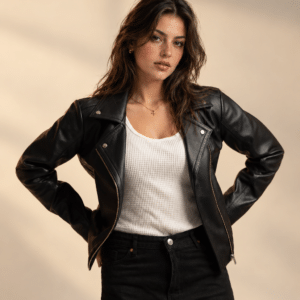
Women’s Leather Biker Jacket
Original price was: $ 350.$ 280Current price is: $ 280.Full-grain cowhide, the outer layer of the hide with the grain intact
Asymmetric front zip with notched lapels that fold back
Cropped to the waist, zip cuffs
Five colours:…Select options This product has multiple variants. The options may be chosen on the product pageQuick View -
Biker, Cafe Racer Jackets, Crop Moto Jacket, Women, Women Leather Jackets, Women's Leather Moto Jackets
Leather Crop Moto Jacket
Original price was: $ 399.$ 299Current price is: $ 299.Stand out with the Women’s SoHo Red Cropped Leather Moto Jacket, a bold biker-inspired fashion essential featuring a sleek leather-look finish, classic lapel collar, long sleeves, and a flattering waist-length…
Select options This product has multiple variants. The options may be chosen on the product pageQuick View -
Biker, Black, Cafe Racer Jackets, Women, Women Leather Jackets, Women's Leather Moto Jackets
Women’s Classic Leather Biker Jacket – Timeless Moto Style
Original price was: $ 399.$ 299Current price is: $ 299.Discover timeless biker-inspired fashion with the Women’s Classic Leather Biker Jacket, featuring a sleek leather-look finish, asymmetric front zipper, classic notched lapels, and a flattering waist-length silhouette.
Designed for effortless everyday…
Select options This product has multiple variants. The options may be chosen on the product pageQuick View -
Biker, Cafe Racer Jackets, Women, Women Leather Jackets, Women's Leather Moto Jackets
Leather Classic Moto Jacket for Women – Cropped Zip-Up Biker Jacket
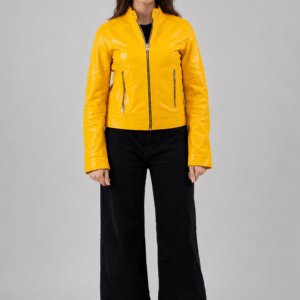
Original price was: $ 399.$ 299Current price is: $ 299.Make a statement with the Leather Classic Moto Jacket, featuring a sleek leather-style finish, modern cropped silhouette, high stand-up collar, and full-length front zipper. Designed with two practical zippered front…
Select options This product has multiple variants. The options may be chosen on the product pageQuick View -
Biker, Cafe Racer Jackets, Women, Women Leather Jackets, Women's Leather Moto Jackets
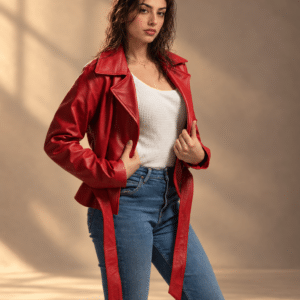
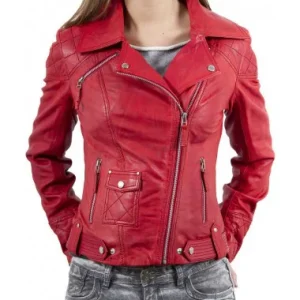
Women’s Red Leather Biker Jacket — Quilted Shoulders, Belted Back
Original price was: $ 335.$ 289Current price is: $ 289.Red asymmetric biker jacket with snap-tipped lapels, diamond-quilted shoulder panels, a snap flap pocket, zip pockets and a buckled belt across the back waist.
Dyed-through full-grain leather — a scuff…
Select options This product has multiple variants. The options may be chosen on the product pageQuick View -
Biker, Black, Cafe Racer Jackets, Women, Women Leather Jackets, Women's Leather Moto Jackets
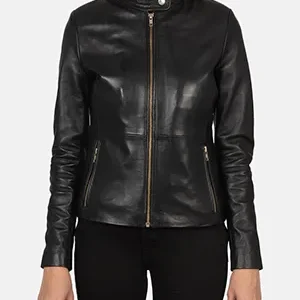
Women’s Black Leather Racer Jacket — Snap Collar
Original price was: $ 345.$ 299Current price is: $ 299.Short black leather jacket with no lapels — a low band collar held by a snap tab, straight centre zip, zip hip pockets and zip cuffs.
Full-grain leather, smooth black…
Select options This product has multiple variants. The options may be chosen on the product pageQuick View

What makes a biker jacket retro rather than modern
Three details, and they all come from the original 1950s pattern. The zip runs off-center so it does not press on your sternum when you lean forward. The lapels fold back and snap down. A belt crosses the waist and buckles to one side. Modern moto jackets keep the asymmetric zip and drop the rest — slimmer lapels, no belt, a longer hem. A retro biker jacket keeps all three.
| Retro cut | Modern cut | |
|---|---|---|
| Zip | Off-center, heavy pull | Off-center, slimmer hardware |
| Lapels | Wide, fold back, snap down | Narrow or none |
| Waist | Belt that buckles to one side | Plain hem or a side tab |
| Length | Cropped, sits above the waistband | Hip length |
| Shoulders | Squarer, epaulette stitching | Soft, unstructured |
| Reads as | Deliberate, period-correct | Quiet, closer to a blazer |
Everything in this collection is the retro cut: cropped, belted, wide-lapel, asymmetric zip. That is the shape people mean when they search for a retro biker jacket rather than just a leather one.
Why cropped and belted changes how it wears
A cropped leather moto jacket ends above your waistband instead of covering it. That does two things. It keeps your leg line unbroken, which is why the cut works over a dress or high-waisted pants where a hip-length jacket cuts you in half. And it puts the belt at your natural waist rather than your hips, so cinching it actually shapes the jacket instead of just gathering fabric.
The trade is coverage. A belted moto jacket is not a winter coat and it was never meant to be. It is a spring and fall jacket that works over a sweater and stops there.
The five colors
- Black — the one you reach for without thinking. Goes with everything, shows the least, and is the only color here that reads as neutral rather than as a choice.
- Beige — the hardest to keep clean and the best looking when you manage it. Softens the shape considerably; a beige moto reads far gentler than a black one in the identical cut.
- Cognac-Brown — warm, and the color that ages most visibly. Edges and elbows lighten with wear, which on brown leather looks intentional rather than worn out.
- Purple — deep rather than bright. Reads near-black indoors and shows its color in daylight, which makes it less of a commitment than it sounds.
- Red — the loudest of the five. Worth owning as a second jacket, not a first.
Retro, vintage and distressed are three different things
The words get used as if they mean the same thing, and they do not.
- Retro describes the cut — a new jacket made on the original pattern.
- Vintage properly means an old jacket, decades old, sold secondhand.
- Distressed is a finish applied before sale: abrasion and oils that make a new jacket arrive already creased and faded.
These are retro, finished clean, and not distressed. They age on you instead of arriving pre-aged — which means the creases land where you bend, not where a factory decided.
Which color to buy
| If you want… | Buy this |
|---|---|
| One jacket that goes with everything | Black |
| The retro shape without the attitude | Beige |
| A jacket that looks better in three years | Cognac-Brown |
| Color that is not obvious at a glance | Purple |
| To be seen across a room | Red |
| Your first leather jacket | Black or Cognac-Brown |
Fit and sizing
Sizes run XS to 3XL, with chest and length given in inches on every product page. A retro biker jacket is meant to be close — the shoulder seam should sit on the edge of your shoulder, not past it, and the hem should land above your waistband. If you are between sizes and plan to wear a sweater underneath, size up; the cropped cut has less room than a hip-length jacket. Email info@cordwainleather.com with your usual size in a brand you already own and we will tell you which to order.
Looking after it
Wipe with a damp cloth, never a soaked one. Condition twice a year, more if you live somewhere dry. If it gets caught in rain, hang it somewhere cool and let it dry on its own — never near a radiator, which stiffens leather permanently. Store it on a wide hanger, not folded, and not in a sealed plastic cover.
Shipping to the US, duties and returns
Free shipping on every order. Orders to the United States arrive in 4 to 9 business days. Import duties are settled before dispatch wherever the carrier supports Delivered Duty Paid to the destination, so on US deliveries there is nothing to hand the courier at the door. Returns stay open for 30 days. All prices are in US dollars.
Questions people ask
Is a biker jacket the same as a moto jacket?
Yes. Two names for the same asymmetric-zip shape. A cafe racer is different — band collar, straight center zip, no lapels.
Are cropped jackets flattering if you are tall?
Yes, and often more so. The cropped hem sits at your natural waist, which keeps the leg line long. On a taller frame it reads as deliberate rather than as a jacket that shrank.
Can I wear a belted moto jacket with the belt undone?
That is how most people wear it. Buckled it is fitted and period-correct; hanging loose it reads more casual. Both are correct, and the belt comes off entirely if you prefer the line straight.
Will the leather stretch?
It softens and molds to you over the first few weeks, which is normal and is why a new jacket should feel slightly firm. It does not keep stretching after that.
What should I wear under a cropped leather jacket?
A tee, a thin knit, or a dress. Anything bulkier fights the cut — if you need to layer a thick sweater, size up at the point of ordering rather than squeezing into your usual.
Is black or brown the better first leather jacket?
Black if you want it to disappear into your wardrobe. Cognac-Brown if you want it to become yours — brown shows ageing in a way black simply does not.
How long does delivery take to the United States?
4 to 9 business days, free, with duties settled before dispatch where the carrier supports Delivered Duty Paid to the US.